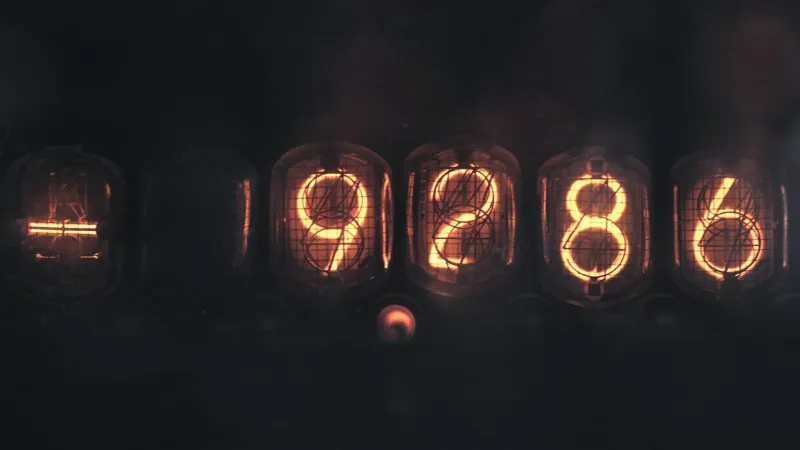
Bet 6.66, Post the Pain: How a Losing Streak Became Gambling TikTok's Favorite Format
Photo: By Richard 'Tenspeed' Heaven, CC BY 2.0, via Wikimedia Commons
The setup takes about four seconds to explain, which is roughly the attention span of the audience it is built for. Open a game, bet $6.66, spin. Do it again. Keep doing it until you hit a win big enough to react to, or until a pre-set number of spins runs out and you eat the loss on camera.
That is the 666 challenge. It is not sophisticated. It is not a strategy. It is, apparently, extremely good television.
Why the Format Works
Structured repetition is the oldest trick in entertainment. A countdown, a timer, a streak — anything that makes a viewer ask how long can this go is doing real work. The 666 challenge borrows that structure and bolts it onto a slot or crash game, which means every single round is a small, unresolved question.
The $6.66 stake is doing double duty. It is low enough that a creator can plausibly fund a twenty-spin run without a sponsor, and it is high enough that a losing run feels like something. Six times six times six. The caption writes itself.
And the number is the point. The whole thing is a bit. Creators lean into it — devil emoji, ominous music, a fake solemn vow to break the curse on spin seventeen. It reads as superstition cosplay, which is exactly why it travels. Nobody feels like they are watching a gambling ad. They feel like they are watching somebody mess around.
Losses Make Better Clips
Here is the part that separates the 666 challenge from older gambling content. Winning streak videos are boring. They are over too fast, and the emotion is one-note.
A losing run is a slow build. The commentary gets funnier. The face changes. There is a moment around spin nine where the creator starts narrating their own funeral, and it lands every time because everyone watching has felt that specific flavor of mild regret.
The result is a format that rewards the outcome gambling content usually buries. Clips of people losing do better numbers than clips of people winning, because losing is the shared experience. Winners are aspirational. Losers are relatable.
The Sponsorship Nobody Labels
Follow the money and the picture gets slightly less charming.
Many 666 challenge creators are running affiliate links — a code in the bio, a pinned comment, a link in description that is doing four jobs at once. Some are formally sponsored. Others are working on revenue share, which means their payout depends on how many viewers sign up and deposit, which means the incentive is not exactly aligned with restraint.
The disclosure rules in the US are genuinely murky. The FTC has been increasingly vocal about influencer marketing transparency, and paid gambling promotion almost always requires clear disclosure. But the enforcement apparatus is not built for a format where the ad is a challenge and the ad read is a bit about cursed numbers. A viewer would have to know what an affiliate link is, and then read the fine print, to understand that the person losing $130 on camera is likely getting paid for it.
That is a structural weakness, not a conspiracy. But it means the format efficiently launders commercial intent through the aesthetic of authenticity.
What Repetition Does to a Younger Audience
Gambling content has always had a young audience problem. Social platforms nominally restrict it, and the rules are enforced inconsistently enough that a fourteen-year-old scrolling late at night will land on a slot stream long before they land on a responsible-gambling PSA.
The 666 challenge is a particularly effective on-ramp because it does not look like gambling content. It looks like a meme. It looks like something you could do for fun, with a friend, in a group chat. The visual language is borrowed from challenge videos — water bottle flip, spicy noodle, whatever came before. Same structure, different stakes.
And the format normalizes a specific behavior: high-frequency repeated betting. Not a single dramatic wager, but twenty small ones, in a row, with no pause. That is exactly the behavioral pattern most associated with escalating play, and it is presented as a lark.
The Part the Clips Leave Out
The 666 challenge almost never shows the deposit. It never shows the moment the creator decides to run it a second time after the first one topped out the budget. It never shows the top-up. Those are the unglamorous middle steps between the bit and the bank balance, and they are exactly where the habit gets built.
None of this means the format should not exist. It is funny, it is creative, and a good chunk of the people making them are genuinely just having a laugh with a small entertainment budget.
But if you are watching these on autoplay at 1 a.m. and you have started to think that looks like a fun way to spend a Thursday, take the extra five seconds. Count the spins. Note that every one of them costs the same amount. And if it has stopped being a joke for you, the National Problem Gambling Helpline is at 1-800-GAMBLER and it does not care how small your minimum was.
The challenge is designed to end. The habit is not.